“Transforming Nepal’s Economy in a Changing Global Order: Trade, Industry, Jobs, Investment and Sustainable Growth.” The National Economic Concern Society (NECS), Nepal, is a leading

A leading organization of economists devoted for self-reliant and prosperous nation
“Transforming Nepal’s Economy in a Changing Global Order: Trade, Industry, Jobs, Investment and Sustainable Growth.” The National Economic Concern Society (NECS), Nepal, is a leading
“Transforming Nepal’s Economy in a Changing Global Order: Trade, Industry, Jobs, Investment and Sustainable Growth.” The National Economic Concern Society (NECS), Nepal, is a leading

“Transforming Nepal’s Economy in a Changing Global Order: Trade, Industry, Jobs, Investment and Sustainable Growth.” The National Economic Concern Society (NECS), Nepal, is a leading


NECS Nepal successfully organized National Economists’ Conference for the first time in Nepal in March 25-26, 2022. Ganga Bahadur Thapa Chaired the opening ceremony of the conference. The chief guest of the conference was honorable Finance Minister Janardan Sharma. Dr. Baburam Bhattarai, former Prime Minister of Nepal participated as a special guest delivering key note. Other distinguished key note speakers were honorable Dr. Prakash Sharan Mahat, Leader, Nepali Congress Party; honorable Ghanashyam Bhushal, Leader, Communist Party Nepal, UML; honorable Shakti Basnet, leader, Nepal Communist Party (Maoist Centre) and honorable Ram Kumar Phuyal, member of National Planning Commission; Prof. Dr. Shiva Raj Adhikari, Head, Central Department of Economics, Tribhuan Uniersity and Min Raj Kandel Chairman, National Cooperative Federation of Nepal. The welcome Speech was delevered by Prof. Dr. Jiba Nath Dhital, Member of NECS Nepal.
Dr. Jeeban Amgain, Vice Chairman of National Economic Concern Society Nepal presented the theme paper entitled “Outlook of National Economy and Contemporary Issues”.
In the conferece, there were eight different thematic papers. Session Chair, Presenter and Discaussant were as follows.
Session 1
Title : Utilization of Natural Resources for Sustainable Economic Development
Session Chair: Prof. Dr. Jiba Nath Dhital
Presenter: Dr. Sunil Kumar Pokharel
Discussant I: Dr. Chadra Mani Adhikari
Discussant II: Dr. Nirmal Kumar Raut
Session 2
Title : Socialism in Nepali Context
Session Chair: Prof. Dr. Surendra Lav Karna
Presenter: Hari Roka
Discussant I: Dr. Uttam Khanal
Discussant II: Dr. Surendra Upreti
Session 3
Title : Overview of Periodic Plan and Development in Nepal
Session Chair: Deependra Bahadur Kshetri
Presenter: Dr. Min Bahadur Shrestha
Discussant I: Prof. Dr. Surendra Lav Karna
Discussant II: Prof. Dr. Govinda Nepal
Session 4
Title : Transformation of Agricultural Sector in Nepal : Challenges and Opportunities
Session Chair: Dr. Dil Bahadur Gurung
Presenter: Dr. Ganesh Raj Joshi
Discussant I: Dr. Yam Bahadur Thapa
Discussant II: Dr. Sushil Pandey
Session 5
Title : Role of Industrialization on Socialism Oriented Economy
Session Chair: Prof. Dr. Surya Thapa
Presenter: Dr. Uttam Khanal
Discussant I: Babul Khanal
Discussant II: Ganesh Ghimire
Session 6
Title : Sixty Five Years of Nepalese Cooperative Movement and Its Direction
Session Chair: Lila Mani Paudyal
Presenter: Dr. Gyanendra Paudel
Discussant I: Paritosh Paudel
Discussant II: Dr. Chandra Kanta Paudel
Discussant III: Gopi Mainali
Session 7
Title : Financial Inclusion and Productive Investment for Self Sustained Economy
Session Chair: Dr. Raghu Bir Bista
Presenter: Siddha Raj Bhatta
Discussant I: Nar Bahadur Thapa
Discussant II: Ananta Raj Dahal
Session 8
Title : Dichotomy of Neoliberalist Policy Framework in Nepal
Session Chair: Prof. Dr. Bishwombhar Pyakurel
Presenter: Baikuntha Pandey
Discussant I: Assoc. Prof. Ananta Kumar Mainali
Discussant II: Dr. Dilli Raj Khanal
Discussant III: T.N. Acharya
“Transforming Nepal’s Economy in a Changing Global Order: Trade, Industry, Jobs, Investment and Sustainable Growth.”
The National Economic Concern Society (NECS), Nepal, is a leading organization of economists committed to advancing policies and strategies for Nepal’s economic prosperity and national development. Established in 2007, NECS is guided by the vision of “Empowering the National Economy to be Self-Sustained, Self-Governed, and Nationally Nurtured.”
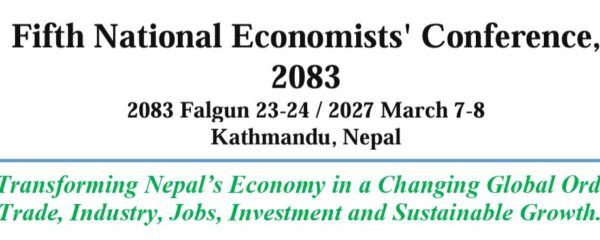
Reflecting this vision, the Fifth National Economic Conference–2083will focus on the theme:
The conference will provide a broad and inclusive platform for economists, policymakers, scholars, researchers, practitioners, students, and political leaders to deliberate on Nepal’s pressing economic challenges and emerging opportunities in the context of a rapidly changing global economic and geopolitical landscape.
We invite conference paper submissions from intellectuals, experts, practitioners, researchers, and students addressing diverse dimensions of Nepal’s economic transformation. The conference seeks to promote evidence-based policy dialogue, innovative and actionable policy recommendations, and meaningful collaboration among key stakeholders committed to building a productive, resilient, inclusive, and sustainable Nepali economy.
Major Thematic Areas of the Conference:
The conference will examine Nepal’s economic transformation in the context of a rapidly changing global order, with particular emphasis on productive transformation, industrialization, employment generation, investment mobilization, trade competitiveness, resilience, inclusion, sustainability, and good governance.
1. Economic Thought, Political Economy, Governance and Institutional Transformation:
2. Macroeconomic Policy, Planning, Public Finance and Development Management:
3. Innovation, Entrepreneurship, Science, Technology and Digital Transformation
4. Agriculture, Land, Forestry, Environment and Green Transformation
5. Infrastructure and Productive Connectivity
6. Transport, Logistics and Regional Connectivity
7. Human Capital, Education, Skills, Migration and Development
8. Social Transformation, Security, Foreign Affairs and Economic Diplomacy
9. Energy, Water and Natural Resources for Productive Transformation
10. Remittances, Cooperatives, Banking and Finance for Productive Investment
11. Tourism, Industry, Commerce, Investment, Trade and Supply-Chain Resilience
12. Decent Work, Productive Employment and Sustainable Social Protection
13. Emerging Issues for Nepal’s Economic Transformation
14. Cross-Cutting Conference Lens
Across all thematic areas, papers may address five interconnected questions:
1. Trade: How can Nepal become more competitive, diversify exports and reduce excessive import dependence?
2. Industry: How can Nepal accelerate industrialization, domestic production, value addition and productivity?
3. Jobs: How can economic transformation generate sufficient productive, decent and sustainable employment, particularly for youth?
4. Investment: How can domestic savings, remittances, private investment and FDI be mobilized towards productive sectors?
5. Sustainable Growth: How can Nepal achieve growth that is inclusive, environmentally sustainable, regionally balanced and resilient to global shocks?
6. Disaster Management: How can Nepal effectively handle natural disaster?
Important Deadlines and Conference Dates:
| Submission Type | Deadline (English 2026) | Deadline (Nepali 2083) |
| Abstract Submission | 6 September 2026 | 20 Ashwin 2083 |
| Acceptance Notification | 11 October 2026 | 25 Ashwin 2083 |
| Full Paper Submission | 30 January 2026 | 16 Magh 2083 |
| Conference Dates | 7–8 March 2026 | 23–24 Falgun 2083 |
| Registration Fee | ||
| National | Student: Rs. 2500/- | Others: Rs. 5000/- |
| International | Student: $ 100 | Others: $ 200 |
Paper Submission Guidelines:
Papers submission can be made only through the official email of the conference (hard copy/printed copy will not be accepted). Detailed manuscript guidelines and instructions for conference paper submissions will be available soon on the organizer’s website.
Emails for the paper submission: ecoconference.necs@gmail.com
For the update, please visit the website: necs.org.np
Fourth National Economic Conference, 2082
( 5–6 Mangsir 2082, Kathmandu)
The National Economic Concern Society (NECS), Nepal, is a leading organization of economists dedicated to promoting policies that ensure the country’s economic prosperity. Established in 2007, NECS is guided by the vision of “Empowering the National Economy to be Selfsustained, Self-governed, and Nationally Nurtured.” Reflecting this vision, the Fourth National Economic Conference-2082 will focus on “Building a Self-Reliant and Nation-Driven Economy: Pathways to Sustainable Growth, National Prosperity, and Inclusive Development.” The conference provides a broad platform for economists, policymakers, scholars, students and political leaders to discuss contemporary economic challenges and opportunities for Nepal. We invite submissions of conference papers from intellectuals, experts, practitioners, researchers and students on diverse topics. The event aims to foster evidence-based dialogue, encourage innovative policy recommendations, and strengthen collaboration among stakeholders committed to advancing Nepal’s economic self-reliance and national development.
The conference will be held in Kathmandu focusing on themes relevant to the country’s key economic challenges and priorities.
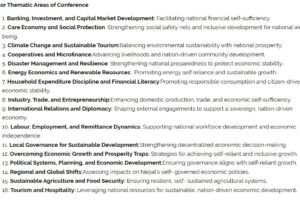
Major Thematic Areas of Conference
Important Deadlines and Conférence Dates:
| Submission Type | Deadline (English 2025) | Deadline (Nepali 2082) |
| Abstract Submission | 15 September 2025 | 30 Bhadra 2082 |
| Acceptance Notification | 25 September 2025 | 09 Aswin 2082 |
| Full Paper Submission | 25 October 2025 | 08 Kartik 2082 |
| Conference Dates | 21–22 November 2025 | 5–6 Mangsir 2082 |
Paper Submission Guidelines:
Papers submission can be made only through the official email of the conference not hard copy/printed copy in person can be accepted. Detailed manuscript guidelines and instructions for conference paper submissions will be available soon on the organizer’s website.
Emails for the paper submission: ecoconference.necs@gmail.com
For the update please visit the website: necs.org.np


काठमाण्डौ । मुलुकको दिगो आर्थिक वृद्धि र विकासका लागि अर्थतन्त्रको संरचना निर्दिष्ट हुन आवश्यक छ । नेपालको संविधान, २०७२ ले समाजवादउन्मुख अर्थतन्त्रको परिकल्पना गरेको छ भने आर्थिक प्रणालीका हिसाबले देशमा मिश्रित अर्थव्यवस्थालाई अवलम्बन गरिएकोे छ । तर, संरचनागत कमजोरी र स्पष्ट नीति तथा कार्ययोजनाको अभावमा यी दुवै संरचनागत मोडेलबाट प्राप्त हुन सक्ने सकारात्मक प्रतिफललाई हासिल गर्न सकिएको छैन । खासगरी मुलुकको अर्थतन्त्रको यथार्थ अवस्थालाई विद्यमान राजनीतिक विचारधारासँग जोड्न नसकिएकाले अर्थराजनीतिक धार कमजोर बन्न पुग्दा आर्थिक विकास र समृद्धिको पथमा सोचेजस्तो उपलब्धि हुन नसकेको देखिन्छ ।
देशको विकास र स्थायित्वका लागि सरकार, राजनीतिक दल, निजी क्षेत्र, नागरिक समाजलगायतबाट प्रयत्नहरू गरेको जस्तो देखिए तापनि ठोस र निर्दिष्ट कार्यक्रमहरूसहित समन्वयात्मक पहलकदमी हुन नसक्दा अपेक्षित नतिजा प्राप्त हुन सकेको छैन । देशमा आन्तरिक तथा बाह्य लगानीमा वृद्धि ल्याई तीव्र आर्थिक वृद्धि हासिल गर्ने उद्देश्यका साथ सरकारले विगतका विभिन्न समयमा गरेका लगानी सम्मेलनबाट पनि अपेक्षित उपलब्धि हाँसिल हुन सकेको छैन् ।

यसका लगि आर्थिक तथा राजनीतिक उपलब्धि हासिल गर्नका लागि अर्थशास्त्रलाई राजनीतिसँग र राजनीतिलाई अर्थशास्त्रसँग जोड्न सक्नु पर्छ । राज्यको साधन र स्रोतमाथिको नियन्त्रण सरकारमा सहभागी राजनीतिक पार्टीहरूसँग हुन्छ, जसको समुचित परिचालन देशको समग्र अर्थतन्त्र र आर्थिक सिद्धान्तहरूको सुझबुझबाट मात्रै सम्भव हुन्छ ।
यिनै विषयवस्तुलाई मध्यनजर गर्दै राष्ट्रिय आर्थिक सरोकार समाज, नेपालले राजनीतिकर्मी र अर्थशास्त्रीहरूलाई एकाकार गर्दै देशको आर्थिक विकासकोे यात्रामा योगदान पु¥याउने उद्देश्यका साथ हरेक वर्ष ‘राष्ट्रिय अर्थशास्त्री सम्मेलन’ आयोजना गर्दै आइरहेको सर्व विधितै छ । यसको अतिरिक्त संस्थाले विगत एक वर्षदेखि अध्ययन, अनुसन्धान, विज्ञहरूसँगको बहस र छलफलबाट नीतिगत समस्याको पहिचान गर्दै परिमार्जनका लागि खबरदारी गर्ने अठोटका साथ त्रैमासिक पत्रिका ‘आर्थिक सरोकार’ तत्कालिन अर्थमन्त्री वर्षमान पूनद्धारा लोकार्पण गरी निरन्तर प्रकाशन गर्दै आएको छ ।

उक्त पत्रिकाका संरक्षक नेस नेपालका अध्यक्ष गंगाबहादुर थापा, सल्लाहकार समितिमा पूर्व गभर्नर दीपेन्द्रबहादुर क्षेत्री, नेपाल सरकारका पूर्व मुख्य सचिव लीलामणी पौडेल र ईपानका पूर्व अध्यक्ष कृष्ण आचार्य रहेका छन् । त्यसैगरी सम्पादन सल्लाहकार सिके खनाल, प्रबन्ध निर्देशक दुर्गा थापा, सम्पादक केशव आचार्य, सह सम्पादक गंगा चौलागाई र दिपक थापा तथा व्यवस्थापकमा ज्ञानेश्वर खनाल रहेका छन् ।
यसैबिच वर्तमान डिजिटल युगमा पाठकहरुको परिवर्तित रुचिलाई मध्यनजर गर्दै अनलाईन पत्रिकाको रुपमा न्यूज पोर्टल ‘अर्थशास्त्री डट कम’ (बचतजबकबकतचष्।अयm) सञ्चालन गर्ने जमर्को गरेसँगै वर्तमान अर्थमन्त्री विष्णुप्रसाद पौडेलद्धारा समुद्घाटन गरी सञ्चालनमा ल्याएको छ । नितान्त गैरनाफामूलक सामाजिक संस्थाका रूपमा रहेको यो संस्थाबाट सञ्चालन हुन गइरहेको न्यूज पोर्टल ‘अर्थशास्त्री डट कम’ मार्फत हाम्रो सम्पूर्ण टिम आमसञ्चार र पत्रकारिताको आचारसंहिता र धर्मलाई आत्मसात् गर्दै देशको आर्थिक–सामाजिक समुन्नतिका लागि योगदान गर्ने प्रण गर्दछ । साथै हाम्रो यस प्रयासलाई विभिन्न तवरबाट साथ सहयोग पुर्याउनेसम्पूर्ण सङ्घसंस्था र महानुभावहरूमा आभार व्यक्त गर्दै आगामी दिनहरुमा हाम्रो यस अभियानलाई थप उचाईमा पुर्याउनका लागि सुझाव र सल्लाहको समेत अपेक्षा गरिन्छ ।
काठमाण्डौ ।

राष्ट्रिय आर्थिक सरोकार समाज(नेस) नेपाल र आर्थिक विकास तथा प्रशासन अनुसन्धान केन्द्र (सेडा)कोे संयुक्त आयोजनामा माननीय उप–प्रधान तथा अर्थमन्त्री विष्णुप्रसाद पौडेलज्यूूको प्रमुख आतित्थ्यतामा र सेडाका कार्यकारी निर्देशक डा. अर्जुन बरालको अध्यक्षतामा आर्थिक वर्ष २०८२/८३ को बजेट सन्दर्भमा छलफल तथा सुझाब संकलन कार्यक्रम यहि मिति २०८२ वैशाख १२ गते राष्ट्रिय तथ्यांक कार्यालयको सभाहलमा सम्पन्न भएको थियो ।

उक्त कार्यक्रममा राष्ट्रिय योजना आयोगका पूर्व सदस्य डा. राम कुमार फुयालले प्रस्तुत गर्नुभएको कार्यपत्रमाथि छलफल भएको थियो । नेपाल सरकारको अर्थ मन्त्रालयका सचिव, राजश्व सचिव, आ.व.२०८२/८३ का बजेट निर्माण समितिका सदस्यहरू, औद्योगिक संघसंस्थाका प्रतिनिधिज्यूहरू, नीति अनुसन्धान प्रतिष्ठानका अनुसन्धानकर्ताहरू, बैंकिंङ्ग क्षेत्रका प्रतिनिधिहरु, अर्थशास्त्रका प्राध्यापकहरू लगायतका विशिष्ट व्यक्तित्वहरूको समुपस्थितिमा सम्पन्न उक्त कार्यक्रममा संकलित २१ बुँदे सुझावहरुलाई राष्ट्रिय आर्थिक सरोकार समाज नेपालका अध्यक्ष तथा आर्थिक विकास तथा प्रशासन अनुसन्धान केन्द्र(सेडा)का निर्देशक लगायतका टिमद्धारा अर्थमन्त्री विष्णुप्रसाद पौडेललाई बुझाइएको थियो ।

National Economic Concern Society, (NECS) Nepal is going to organize the “Third National Economists’ Conference-2080” on 5th and 6th March, 2024.
We are delighted to extend a warm invitation to all who are more or less concern with the Nepalese Economy to join us at the conference. The inaugural session of the conference that will be held on 5th March (23rd Chaitra), 2024 at Rastriya Sabha Griha, Pradarshani Marga, Kathmandu will be completely open and does not require any participation fee.
Whether you’re a student eager to learn, a professional seeking new insights, or a curious individual with a passion for knowledge, this conference will be beneficial for you.
Highlights of the conference is based on:
Ø Sustainable development of Information Technology, Tourism and agricultural sector
Ø Trade deficit, Balance of Payment and Foreign Exchange
Ø Disaster management, Climate change and possible threats to community life
Ø Foreign and domestic employment, Remittance
Ø Changing Regional-Global Order and its Possible Impact on Nepal
Ø Role of local government in sustainable development
Ø Restructuring Cooperatives and Microfinance
Ø Industrial activities, value chain, and value addition
Ø Political system, planning, and economic development
Ø Banking and Investment, Money and Capital Market

