
Call for Paper – Fifth National Economists’ Conference-2083
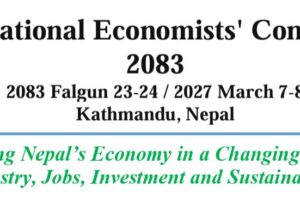
“Transforming Nepal’s Economy in a Changing Global Order: Trade, Industry, Jobs, Investment and Sustainable Growth.”
The National Economic Concern Society (NECS), Nepal, is a leading organization of economists committed to advancing policies and strategies for Nepal’s economic prosperity and national development. Established in 2007, NECS is guided by the vision of “Empowering the National Economy to be Self-Sustained, Self-Governed, and Nationally Nurtured.”
Reflecting this vision, the Fifth National Economic Conference–2083will focus on the theme:
The conference will provide a broad and inclusive platform for economists, policymakers, scholars, researchers, practitioners, students, and political leaders to deliberate on Nepal’s pressing economic challenges and emerging opportunities in the context of a rapidly changing global economic and geopolitical landscape.
We invite conference paper submissions from intellectuals, experts, practitioners, researchers, and students addressing diverse dimensions of Nepal’s economic transformation. The conference seeks to promote evidence-based policy dialogue, innovative and actionable policy recommendations, and meaningful collaboration among key stakeholders committed to building a productive, resilient, inclusive, and sustainable Nepali economy.
Major Thematic Areas of the Conference:
The conference will examine Nepal’s economic transformation in the context of a rapidly changing global order, with particular emphasis on productive transformation, industrialization, employment generation, investment mobilization, trade competitiveness, resilience, inclusion, sustainability, and good governance.
1. Economic Thought, Political Economy, Governance and Institutional Transformation:
- Economic thought and alternative pathways for Nepal’s economic transformation
- Political economy of development, state–market relations and institutional reform
- Governance, accountability, transparency and rule of law
- Economic policy institutions and regulatory reforms
- Federalism, intergovernmental relations and effective public service delivery
2. Macroeconomic Policy, Planning, Public Finance and Development Management:
- National plans, policies, programmes and annual budgets
- Fiscal and monetary policy for economic transformation
- Public investment, expenditure efficiency and fiscal sustainability
- Resource mobilization and development financing
- Macroeconomic stability and resilience amid global economic uncertainty
3. Innovation, Entrepreneurship, Science, Technology and Digital Transformation
- Innovation-driven economic transformation
- Entrepreneurship, startups and new business models
- Information and communication technology and the digital economy
- Artificial intelligence, emerging technologies and productivity
- Traditional and indigenous knowledge for
- Technology transfer, research and development
- Digital public infrastructure and e-governance
4. Agriculture, Land, Forestry, Environment and Green Transformation
- Transformation from subsistence to commercial and productive agriculture
- Agro-processing, value chains and import substitution
- Land-use policy and productive utilization of land
- Forest-based economy and natural capital
- Climate-resilient agriculture and environmental sustainability
- Green growth, circular economy and low-carbon development
5. Infrastructure and Productive Connectivity
- Infrastructure as a foundation for economic transformation
- Quality, efficiency and financing of infrastructure
- Economic corridors, industrial corridors and growth centres
- Urban infrastructure and productive cities
- Public–private partnerships and innovative infrastructure financing
- Infrastructure resilience and climate adaptation
6. Transport, Logistics and Regional Connectivity
- Road, air and water transport development
- Multimodal transport and logistics systems
- Reducing the cost of trade and improving competitiveness
- Cross-border connectivity and regional economic integration
- Nepal’s strategic position between India and China
- Transport infrastructure for industrialization, tourism and export promotion
7. Human Capital, Education, Skills, Migration and Development
- Education and skills for a changing labour market
- Technical and vocational education and training
- Youth migration, brain drain and talent retention
- Productive migration and returnee reintegration
- Migration, remittances and development transformation
- Education, health, culture and sports as components of human capital development
8. Social Transformation, Security, Foreign Affairs and Economic Diplomacy
- Inclusive development and social cohesion
- Social, economic and human security
- Foreign policy and economic diplomacy
- International cooperation and development partnerships
- Nepal’s role in a changing regional and global economic order
- Geopolitics, economic security and national resilience
9. Energy, Water and Natural Resources for Productive Transformation
- Hydropower and renewable energy development
- Energy security and affordable energy for industries
- Electricity-based industrialization and green transformation
- Water resources and integrated water management
- Natural resource-based industries and value addition
- Energy trade and regional energy integration
10. Remittances, Cooperatives, Banking and Finance for Productive Investment
- Productive utilization of remittances
- From consumption-oriented remittances to productive investment
- Cooperatives and community-based economic development
- Banking, financial institutions and access to finance
- Monetary policy, credit allocation and investment
- Capital markets and long-term development financing
- Mobilizing domestic savings for productive investment
11. Tourism, Industry, Commerce, Investment, Trade and Supply-Chain Resilience
- Industrialization and structural transformation
- From imports and trade to domestic production and value addition
- Import substitution and export competitiveness
- Domestic and foreign investment mobilization
- FDI policy and investment climate
- Industrial clusters, special economic zones and economic corridors
- Trade policy, market diversification and global value chains
- Supply-chain resilience amid international economic disruptions
- Tourism and Hospitality by leveraging resources for nation-driven economic development.
12. Decent Work, Productive Employment and Sustainable Social Protection
- Employment-centred economic transformation
- Productive employment and decent jobs
- Youth employment and entrepreneurship
- Skills development aligned with industry demand
- Labour productivity and competitiveness
- Women’s economic participation and inclusive employment
- Social protection for productive and inclusive development
- Linking social protection with care economy, employment, skills and economic opportunities
13. Emerging Issues for Nepal’s Economic Transformation
- Sustainable Development Goals and the 2030 Agenda
- LDC graduation and post-graduation economic strategy
- Climate change and economic resilience
- Regional and global economic shocks
- Population dynamics and demographic transition
- Inequality, inclusion and balanced regional development
- Evidence-based policymaking, data and statistical systems
- Emerging issues affecting Nepal’s economic transformation
14. Cross-Cutting Conference Lens
Across all thematic areas, papers may address five interconnected questions:
1. Trade: How can Nepal become more competitive, diversify exports and reduce excessive import dependence?
2. Industry: How can Nepal accelerate industrialization, domestic production, value addition and productivity?
3. Jobs: How can economic transformation generate sufficient productive, decent and sustainable employment, particularly for youth?
4. Investment: How can domestic savings, remittances, private investment and FDI be mobilized towards productive sectors?
5. Sustainable Growth: How can Nepal achieve growth that is inclusive, environmentally sustainable, regionally balanced and resilient to global shocks?
6. Disaster Management: How can Nepal effectively handle natural disaster?
Important Deadlines and Conference Dates:
| Submission Type | Deadline (English 2026) | Deadline (Nepali 2083) |
| Abstract Submission | 6 September 2026 | 20 Ashwin 2083 |
| Acceptance Notification | 11 October 2026 | 25 Ashwin 2083 |
| Full Paper Submission | 30 January 2026 | 16 Magh 2083 |
| Conference Dates | 7–8 March 2026 | 23–24 Falgun 2083 |
| Registration Fee | ||
| National | Student: Rs. 2500/- | Others: Rs. 5000/- |
| International | Student: $ 100 | Others: $ 200 |
Paper Submission Guidelines:
Papers submission can be made only through the official email of the conference (hard copy/printed copy will not be accepted). Detailed manuscript guidelines and instructions for conference paper submissions will be available soon on the organizer’s website.
Emails for the paper submission: ecoconference.necs@gmail.com
For the update, please visit the website: necs.org.np